
Rezal, July 19, 2026 | 12:00 WIB
Frontend
Designing a Modern Developer Portfolio with Next.js
- Next.js
- React
- Tailwind CSS
- TypeScript
- Framer Motion
- GSAP
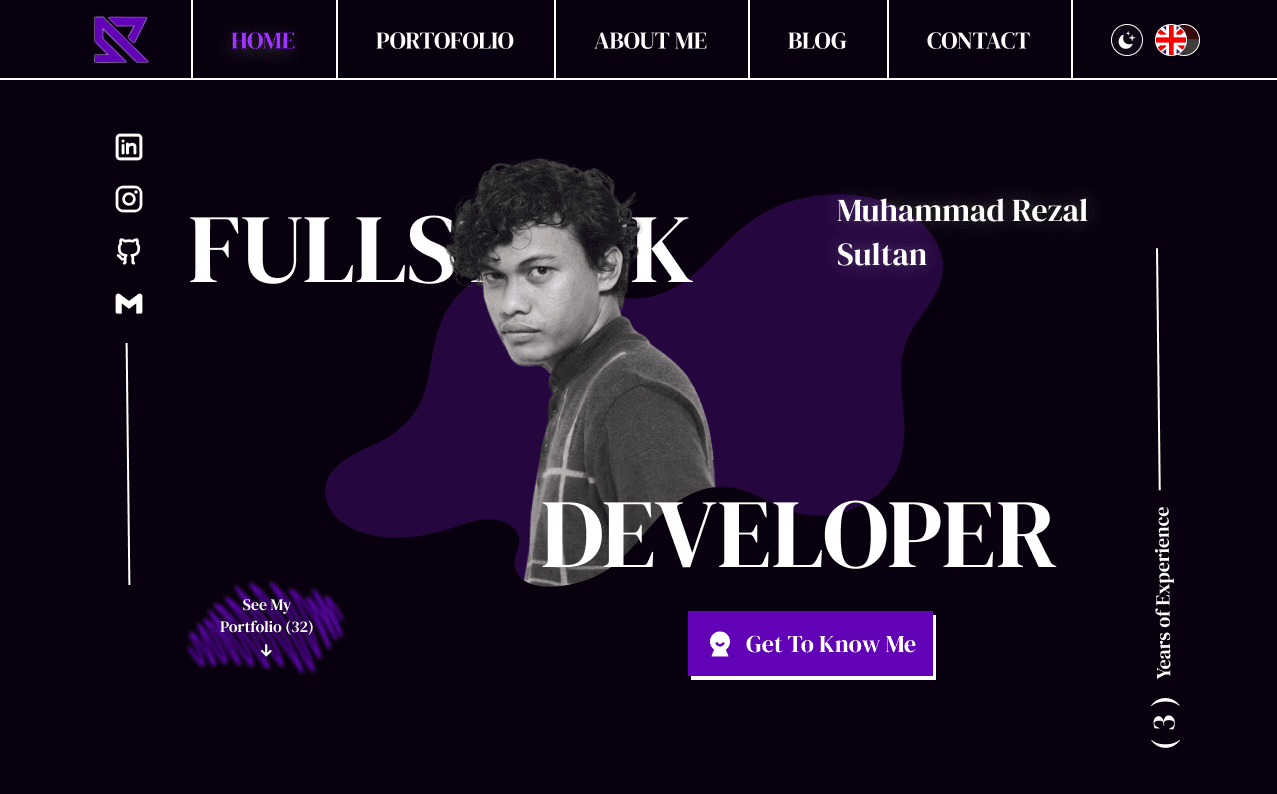
A developer portfolio is often the first impression someone has of your work. It's more than a collection of projects and technical skills. I think a well-designed portfolio should communicate personality, showcase attention to detail, and create an enjoyable experience for every visitor.
Next.js has become a popular choice for building modern portfolios thanks to its excellent performance, flexible routing, and great developer experience. Combined with Tailwind CSS, Framer Motion, and GSAP, it's possible to create smooth page transitions, subtle animations, and responsive layouts that feel polished without sacrificing performance. The goal isn't to fill every section with motion, but to use animation with purpose and improve the overall experience.
Beyond visual design, a good portfolio should also be accessible, fast, and easy to navigate. Features like multilingual support, responsive layouts, optimized images, and clean component architecture make a significant difference as a project grows. These details may seem small individually, but together they create a website that feels professional and reliable.
Building a portfolio is an ongoing process rather than a one-time project. As new experiences, skills, and ideas emerge, the website naturally evolves alongside them. In the end, the most memorable portfolios aren't always the most complex. They are the ones that clearly communicate who the developer is and how they approach building digital products.